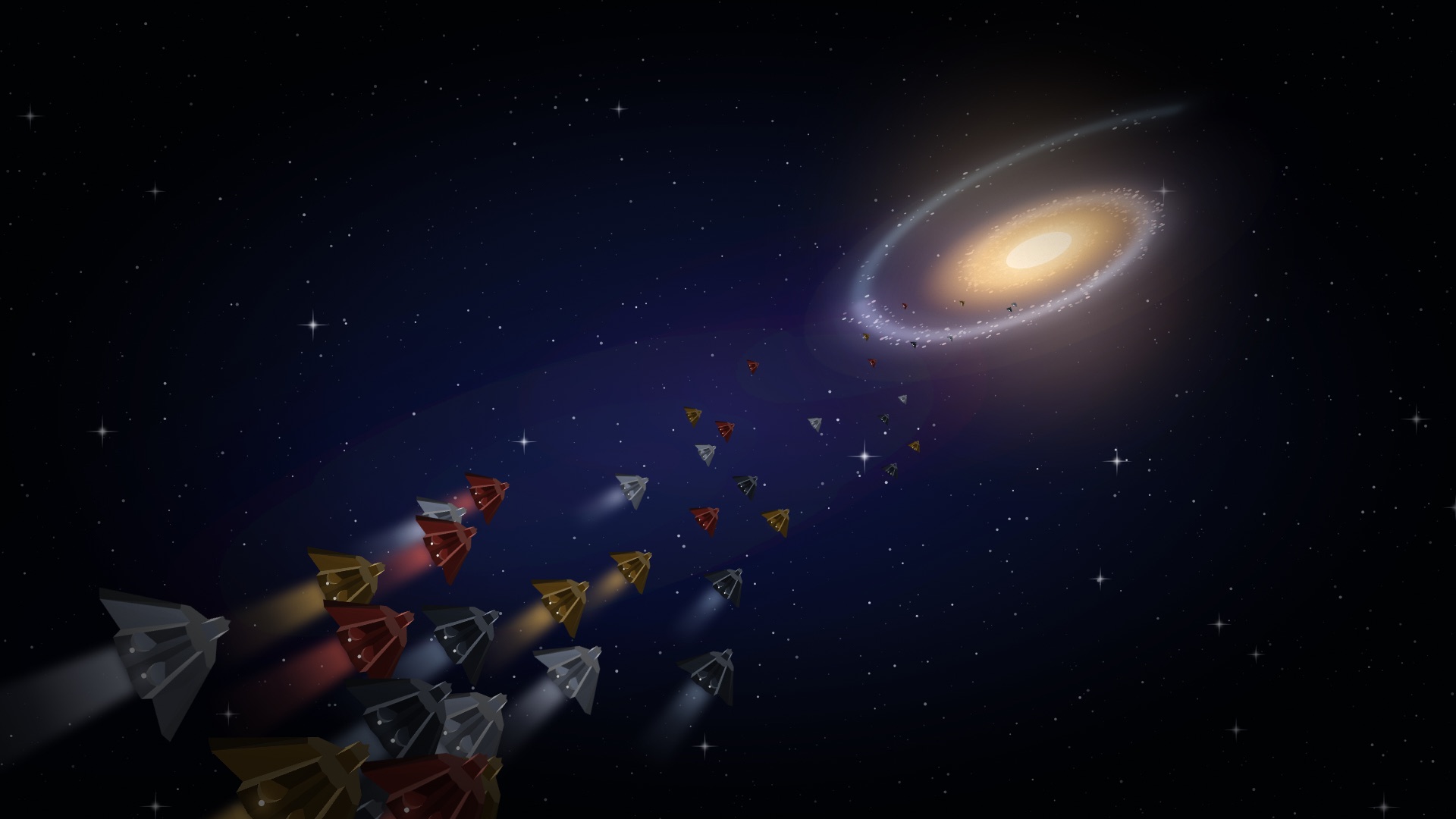
You leave Earth to find aliens. There are none.
Act one · the genre
Planets lie face down. Only a ship parked at a world lets you read it, and scouting reaches one planet out.
Hulls out of metal, up to ten. Your fleet is your reach, your storage and your lives at the same time.
Cargo rides on the ships, so wealth is visible and stealable. Raise the factory tier and better weapons unlock.
Attacks are seen coming; defence is laid down in advance, face down. The attacker picks the moment.
Act two · what is left
Exploit takes the harvest. Exhaust takes the world. Ten on the usage counter and the planet is gone for good, along with every ship still standing on it — yours included.
The map is spent and the only resource left on the table is the other players. Deals, alliances, and the trust you extend knowing exactly what it is worth.
Nowhere left to spread to. You never have to kill a player to beat one — pin them against a dead stretch of map and let the price of every remaining option do the work.
Fewer worlds, less income. Hulls that were cheap in the first hour are irreplaceable in the last, and nobody can afford to walk away from a fight any more.
The first four are the genre and they run themselves. The second four are the game. There is no timer and no round limit, so the turn never arrives on its own — the four of you bring it about on purpose, one spent world at a time, and then have to live in what is left of the board.
You went out there to find something else. There was nothing else.
Ten cards. You play three per turn, face down, and both players reveal at the same time.
Left and right are separate resources. Spend your lefts and you can only dodge right — and your opponent can count that in your discard pile. There is no shuffling your way out of it: the only way to get the cards back is Reset, which reloads you and costs you a phase.
Ships always drift forward and can never stop or reverse. You only nudge sideways. Everything else is about where your nose points.
| Facing | You may fire | Reaches |
|---|---|---|
| Nose-on | Railgun | Straight ahead. Three lanes wide. Centre kills. |
| Broadside | Missiles | Two rows a turn, and never into your own lane. |
Never both. No upgrade and no loadout lets a player opt out of it — and firing costs one of your three actions, so every shot is a step you did not take.
The two weapons counter each other through movement rather than through a rule. Spreading missiles wide burns the lateral cards you also need for dodging, and it makes you move predictably — which is exactly what a railgun is waiting for.
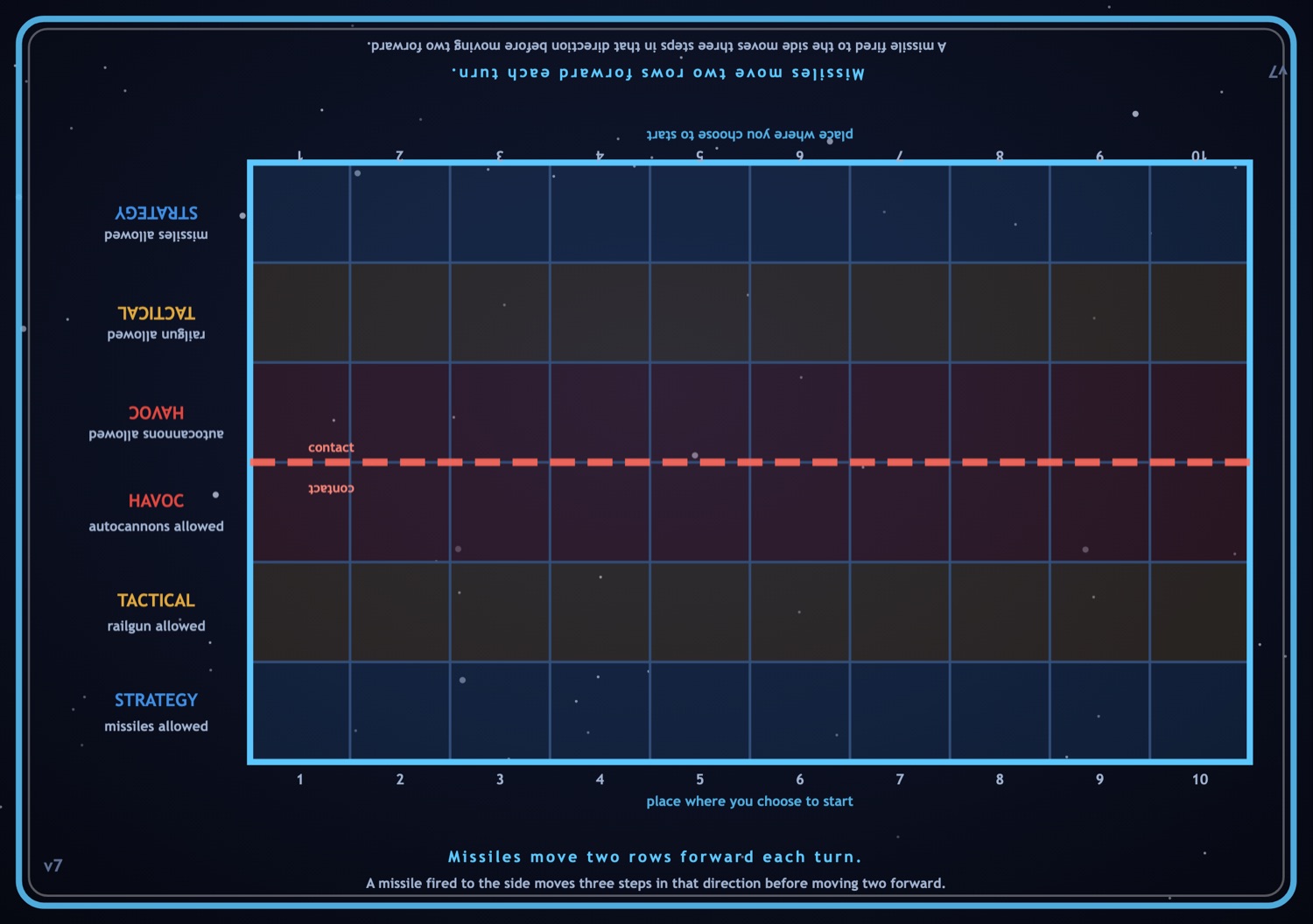
Missiles only, and you start without one. The railgun is warming up and can defend but not kill.
Missiles and railgun both live. Your peak. Three cards you can actually fire.
Autocannon only, 33% to hit. Reaching here means your options ran out. That is the point.
Havoc deliberately has no kill weapon: decide in Strategy or Tactical, or don't decide at all. You may fold at a phase transition — the fight ends, your ship lives, your cargo goes to the other player — but only in a phase where you have not fired. Emptying the magazine and then folding for free would make aggression cost nothing.
If you are still aligned when Havoc runs out, you collide and both lose the entire stake. Collision reaches three lanes — the same width as the railgun. If you can hit him, you can crash into him. The firing position is the dying position, and either player can veer out at the cost of their own shot.
There is no abstract wealth and no safe pile. Everything you produce rides on a ship, and ships can be destroyed.
| Rule | What follows from it |
|---|---|
| 10 movements per turn, split across your whole fleet | Two ships and ten ships travel the same total distance. Size buys presence, storage and stake — never tempo. |
| Max 10 ships. All ships dead and you are out | You never commit everything, because your fleet is also your lives. |
| Every ship carries three cargo pillars | Your wealth stands on the table where anyone can count it and anyone can come and take it. Hoarding is dangerous. |
| Ships are open, planets are hidden | You see every ship and everything it does. What is built on a world is face down, and only presence lets you look. |
Intelligence ages by itself. You saw a tier 1 factory six rounds ago and you have to go back to find out what it is now. Ship movement is the evidence; planet contents are the conclusion.
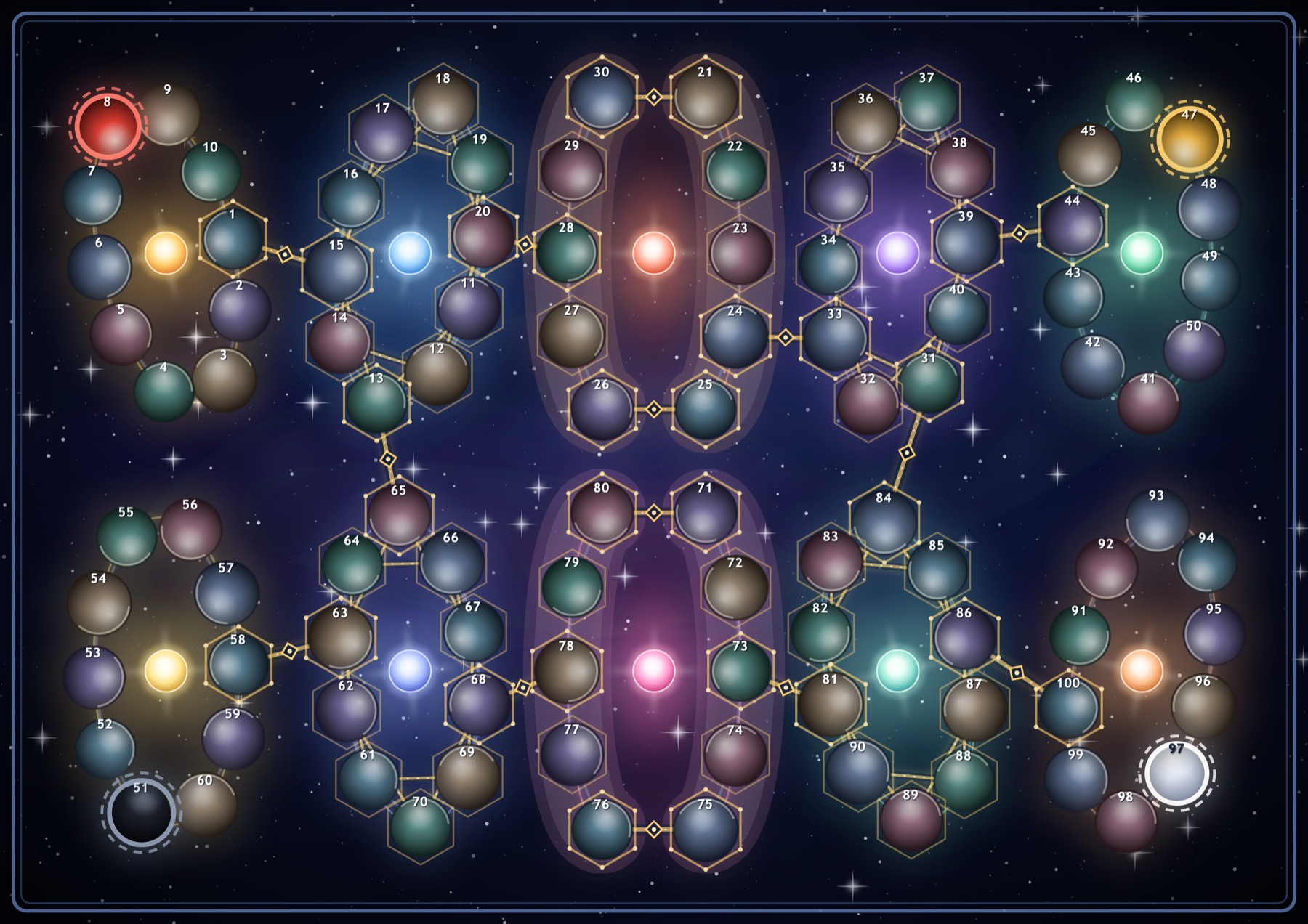
There is no timer and no round limit. A public counter climbs, and at ten you deplete a planet of your choice — killing every ship still standing on it, including your own. It is predictable, so a victim can count the turns and leave. It is a positional mistake, never an ambush.
Fewer planets means less income. Less income means nobody can afford to flee a fight. The players consume their way into the endgame, and the reckoning arrives without a clock ever firing.
| Build | Strong at | Weak at | |
|---|---|---|---|
| Wide | Many hulls | Trades, coverage, information | Winning fights — stuck on autocannons |
| Tall | High factory tier | Ending a fight early | Few lives |
They counter each other with rules that already exist. Trading hulls ruins an elite fleet, so ramming is the wide player's weapon and the tall player has to win cleanly. Spread out you see more and gather more, but every fight is small; clustered you can stake heavily but you are blind and poor. As the map dies, the choice gets taken away from you.
Asymmetric. Each commands its own board: what it can produce, which weapons its factory tier permits, and three skills chosen at the start that you live with for the rest of the game.
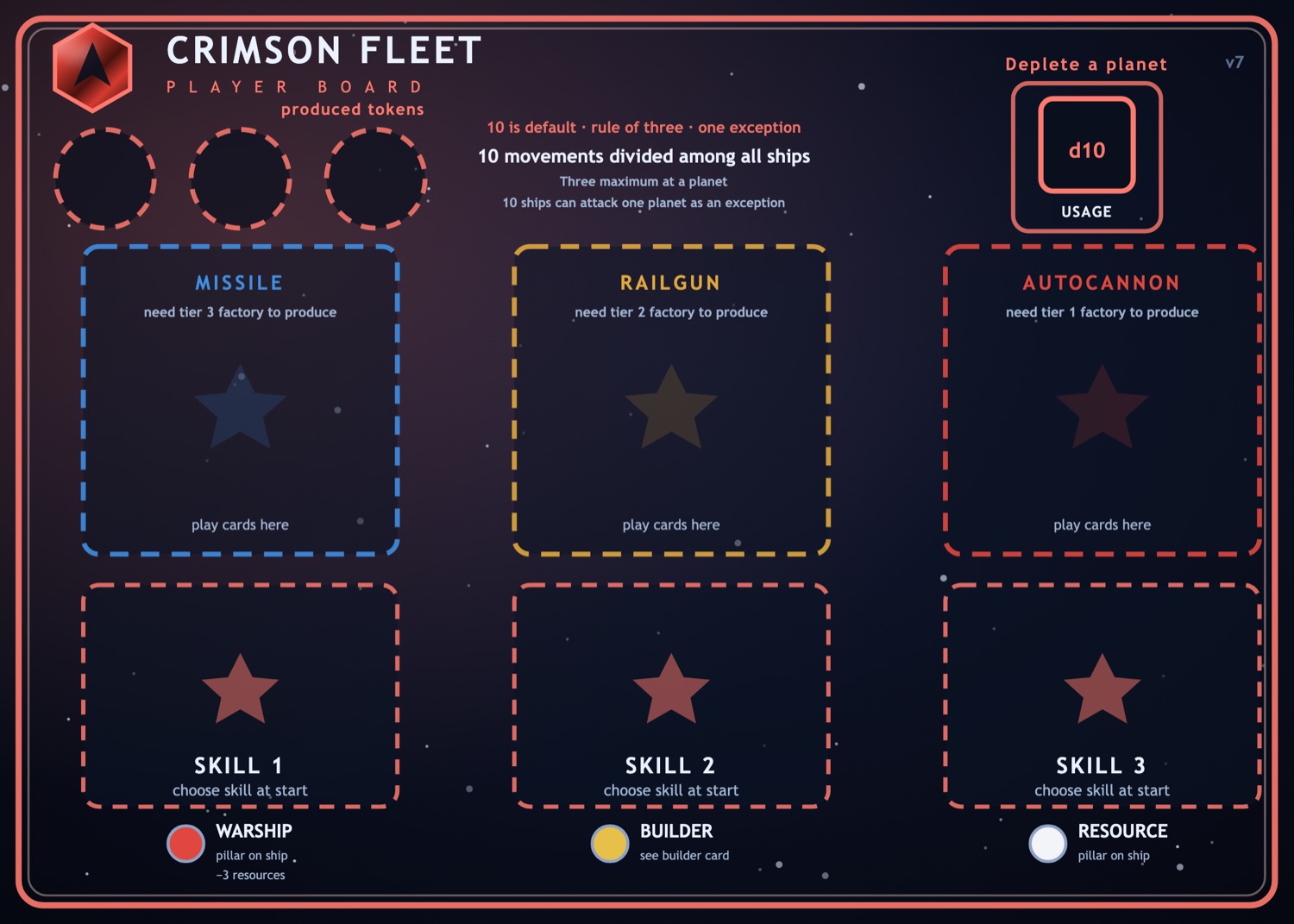
The ships, the pillars, the clips and the box are 3D printed in-house, on a farm that has been running for a decade and printed protective equipment through the pandemic. That is the part that can be fixed in a week instead of waiting on a factory for new tooling — if a piece turns out wrong, it gets redesigned and reprinted the same week.
A band of naive astronauts set out to find aliens, fully armed and loaded with resources. Each takes command of their own ship, off on the great adventure.
But there are no aliens. Space is empty and merciless. The only strangers they find are each other — are they friends, or are the weapons in the mix their undoing?
Small strategic choices bring big tactical effects, more than the astronauts thought, as if logic itself governs the universe and experience can be gathered. Then chance strikes with its merciless final cost, an inevitable law that depended on the choices.
Was it the right call?
Nothing may ever take away a player's movement. Damage removes capability, never position — losing a weapon is fine, losing your turn is not.